

Why Haven’t the Houthis Supported Iran Yet?
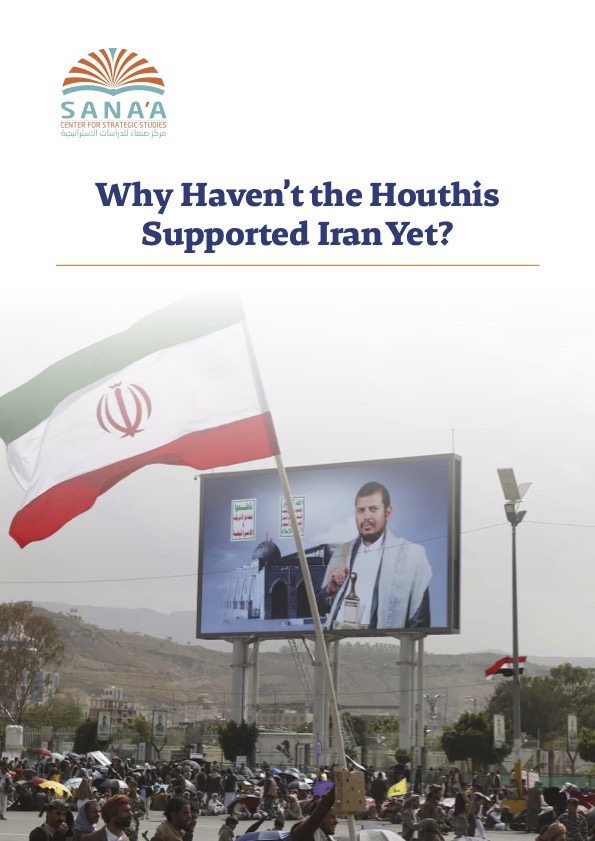
It took the Houthis less than three days to announce their military and political support for Gaza in the wake of the events of October 7, 2023. By October 19, they had fired their first missile toward Israel. Just one month later, they hijacked the Galaxy Leader ship and launched their campaign to disrupt shipping in the Red Sea.
This rapid mobilization stemmed from a miscalculation shared by the Houthis and other members of the Axis of Resistance, who believed the Gaza war would not last long and their intervention would not result in heavy losses. Because the Palestinian cause carries such profound emotional weight across the Arab world, it provided these groups with a potent pretext for involvement. By supporting Gaza, the Houthis cemented their legitimacy and expanded their popularity beyond sectarian divides, temporarily overcoming long-standing Arab suspicions towards Iran’s regional aspirations.
At the same time, such a posture aligns with the Houthis’ broader regional ambitions, which are deeply rooted in their evolving ideology. During their conflict with the Saudi-led coalition from 2015 to 2022, the group downplayed its relationship with Iran and its proxies, particularly Hezbollah, in order to frame itself as a national movement resisting foreign aggression. Such a calibrated approach, however, shifted with Houthi leader Abdelmalek al-Houthi’s speech on October 10, 2023, when he explicitly declared that the group was part of a broader Iran-led regional alliance.
At that time, the Houthis’ relentless ambition, coupled with their emotional dedication to the Palestinian cause and their relative inexperience compared to Hezbollah — especially in dealing with Israeli military power — prompted them to take bold actions. But since then, the Houthis have incurred losses due to military campaigns conducted by the US and Israel. Economic pressures on them have also increased as sanctions and military operations have targeted their key revenue sources.
The Houthis have not abandoned their aspiration to act as a regional player. The costs of previous interventions are unlikely to prevent them from engaging in this conflict. However, there is no doubt that openly supporting Iran is far less compelling domestically than supporting Gaza, which resonates much more strongly with the Yemeni public.
The Houthis now seem to be gearing up for a possible new military confrontation, closely watching developments in Iran and Lebanon. This state of readiness is evident in their military mobilization, media discussions, and the speeches of Abdelmalek al-Houthi after the outbreak of the war in Iran on February 28, in which he has repeatedly stressed the group’s willingness to engage if necessary.
Whether the Houthis intervene is ultimately closely tied to Iranian strategic calculations. At this stage, Iran may not need direct involvement from the Houthis, given that the former is geographically closer to the Gulf states and Israel. However, Houthi intervention could become necessary under two main scenarios. First, if Iran decides to expand the conflict into the Red Sea or attempts to close the Bab al-Mandab Strait. Second, if the war escalates regionally, particularly with direct Saudi involvement, the Houthis would be strategically positioned to launch strikes deep into Saudi territory, and potentially even cross-border ground operations.
Crucially, we must remember that a central element of the Houthis’ identity is their conception as a transnational movement, rather than just a local Yemeni actor. If the ongoing war continues and expands, it would be difficult for them to maintain their distance without undermining their ideological commitments, which would be hard to justify to their base. Moreover, Iran’s long-term investment in the Houthis, which has reportedly strengthened since the Gaza war and intensified after the Twelve-Day War last June, was not based on miscalculation. Tehran expects tangible returns from this investment, and a wider regional confrontation may present that opportunity.
This analysis is part of a series of publications produced by the Sana’a Center and funded by the government of the Kingdom of the Netherlands. The series explores issues within economic, political, and environmental themes, aiming to inform discussion and policymaking related to Yemen that foster sustainable peace. Any views expressed within should not be construed as representing the Sana’a Center or the Dutch government.
Senior Researcher