

The Economy
Yemen’s Economic Deterioration Deepens Food Insecurity
Yemen’s economy remains under severe strain, with its real GDP projected to decline by 1.5 percent in 2025. According to the World Food Programme (WFP), 61 percent of surveyed households in the country struggled to meet their minimum food needs in November. Of this group, 35 percent were facing severe food insecurity. Inadequate food consumption affected 63 percent of households in government-controlled areas and 61 percent in Houthi-controlled areas. Thirty-two percent of households in Houthi-controlled areas reported moderate to severe hunger, up 6 percent year on year, compared to 25 percent in government-controlled areas, down 8 percent. Higher levels were recorded in the Al-Bayda, Al-Dhalea, Raymah, Al-Jawf, and Hajjah governorates. To address food shortages, households adopted severe food-based coping strategies, with a higher prevalence in Houthi-controlled areas (66 percent) than in government-controlled areas (58 percent). These include shifting toward less nutritious foods or restricting adult food consumption in favor of children.
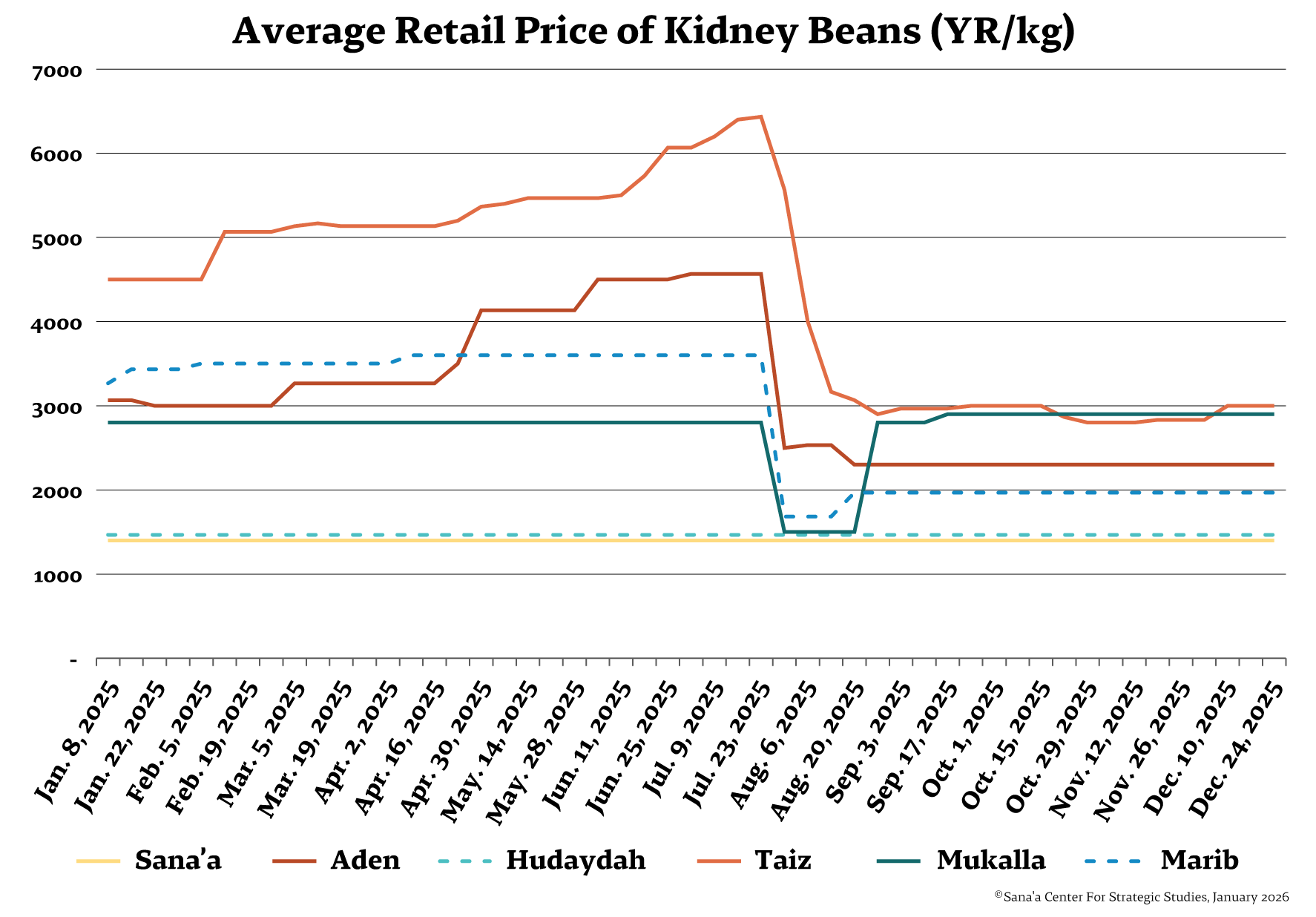
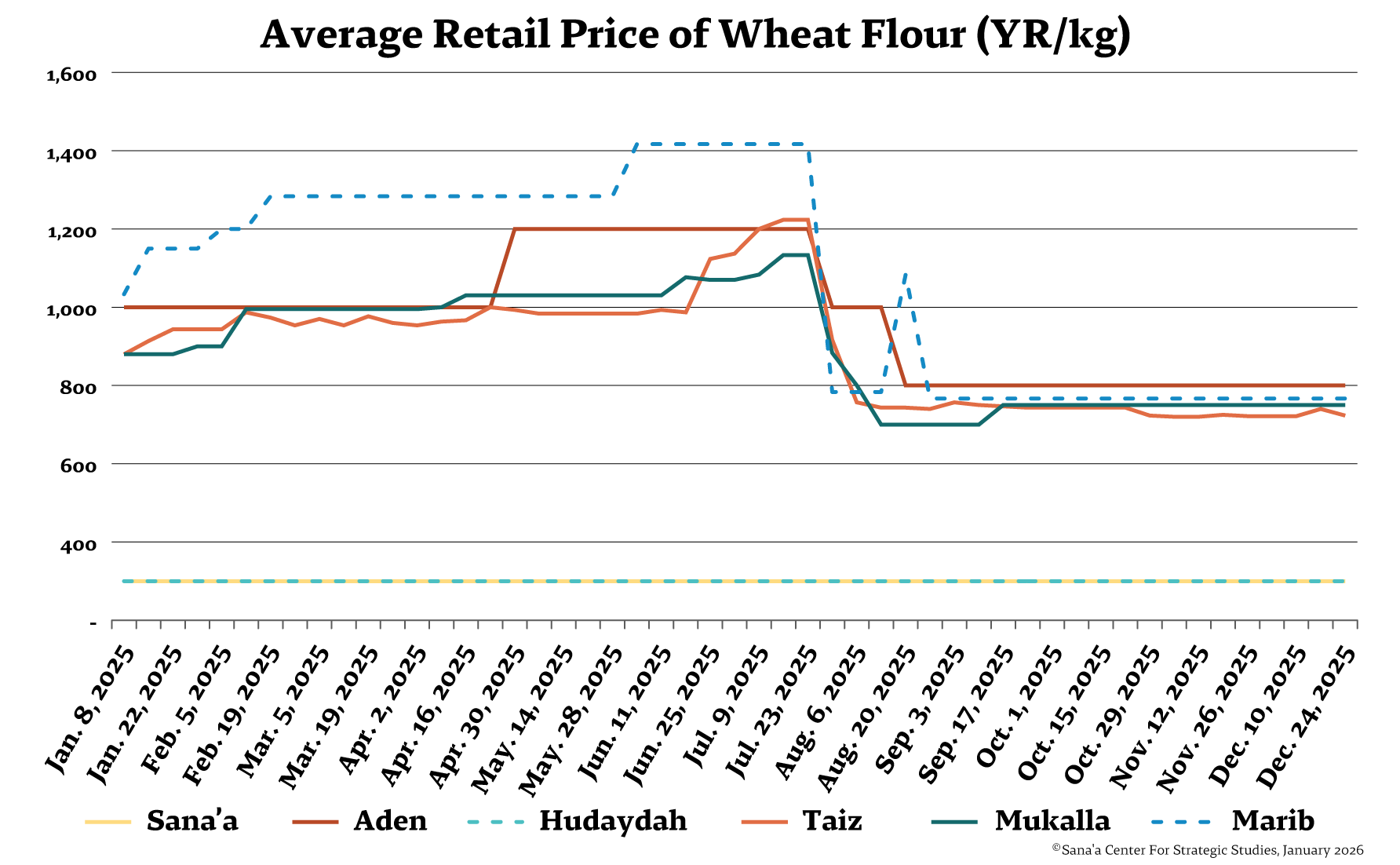
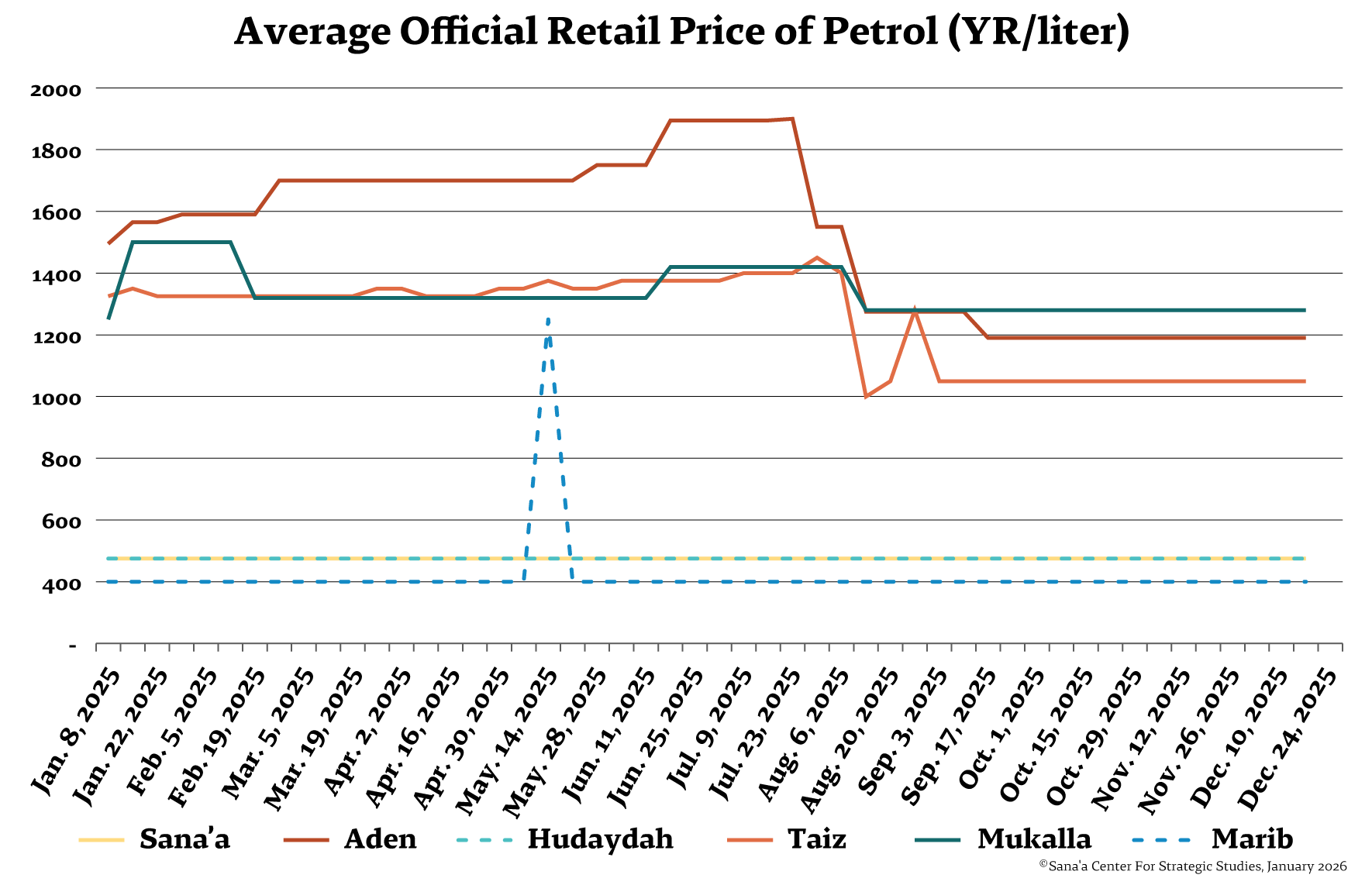
Broadly speaking, the cost of the minimum food basket (MFB) remained stable in government-controlled areas, rising only 1 percent month-on-month. However, this price is down 37 percent from the historic peak in July 2025 and 20 percent from November 2024. This was primarily attributed to the rial’s recovery and a decrease in transportation costs. The rial appreciated by 27 percent year-on-year, driven by the government-enforced measures to manage the exchange rate and tighten oversight of imports and hard currency transactions. As a result, the prices of essential food items declined by 26 percent for sugar, 20 percent for wheat flour, 23 percent for red beans, and 14 percent for sunflower oil. Likewise, fuel prices in November were 11 percent and 9 percent lower than the same period in 2024. Key drivers include the market’s gradual adjustment in line with currency recovery, partly underpinned by declining global crude oil prices. In addition, local crude oil production from Marib partly helps cover domestic fuel needs in government-controlled regions.
In Houthi-controlled areas, the exchange rate stability at YR534 per US$1 has not alleviated economic pressures. The economy continues to face severe strain, mainly characterized by acute dollar shortages, cash withdrawal restrictions, limited civil servant salary payments, curtailed business activity, and banking system disruptions exacerbated by economic sanctions. The severe economic downturn in these areas has been compounded by the US and Israeli airstrikes on Red Sea ports and associated infrastructure over the summer. Reduced capacity continued to constrain trade through these ports, with fuel imports down by 28 percent from January to November compared to the same period in 2024. Food imports through Red Sea ports were 13 percent lower compared to the same period in 2024. While maritime insurance premiums along the Red Sea route have significantly declined following the Gaza ceasefire in October, traffic through the Bab al-Mandab Strait is still less than half the level recorded prior to the escalation of the Red Sea crisis, according to the IMF.
In contrast, food imports via the government-controlled ports of Aden and Al Mukalla increased by 28 percent over the first eleven months of 2025 compared to the same period in 2024. Conversely, fuel imports via these ports declined by 27 percent. This was primarily driven by economic hardships and the government’s decision to terminate contracts with diesel-powered energy providers earlier this year.
The UN’s Yemen Humanitarian Response Plan faced its largest funding gap in a decade, leaving millions without aid and exacerbating an already dire conflict. OCHA reported that the 2025 aid plan received only US$687.9 million, equivalent to about 28 percent of the requested US$2.48 billion by the end of the year, compared to 56 percent in 2024. In 2025, the WFP completed six cycles of food distribution in government-controlled areas, assisting 3.4 million people each cycle. Despite escalating needs, this severe funding shortfall had forced all clusters to scale back critical services. The WFP ceased all activities in Houthi-controlled areas and reduced coverage in government-held areas from 3.4 million to 1.6 million beneficiaries per cycle as of early 2026. In Houthi-controlled areas, the WFP completed two cycles during 2025, targeting around 2.8 million people each cycle. However, its activities in the North have been suspended since August due to a lack of operational space, a situation that continues to hinder the delivery of life-saving humanitarian aid.
The overall economic situation is precarious. Inflation and stagnant wages have eroded people’s purchasing power and their ability to afford imported food staples and medicines. Fuel shortages, higher transport costs, import rerouting, and double taxation have raised prices. With Yemen’s major foreign donors showing limited interest in funding the country’s humanitarian response plan for the new year, severe underfunding is expected to continue. This will force aid agencies to further cut critical services, despite Yemen remaining one of the world’s largest humanitarian crises, with escalating hunger and disease.
Rial Remains Stable
The price of the new rial remained stable, trading around YR1,628 per US$1. It experienced a slight depreciation to YR1,644 per US$1 for a week in early December, triggered by the Southern Transitional Council’s military escalation in Hadramawt and Al-Mahra, which created a complex monetary and economic landscape. The price of old rials circulating in Houthi-controlled areas also remained flat, at YR536 per US$1.

A series of interconnected factors contributed to the stability of the rial in areas under government control. The lower-than-expected release of US$90 million on November 20—out of a total Saudi pledged financial support package of 1.38 billion Saudi riyals (approximately US$368 million)— offered short-term relief to support the rial. This long-awaited support came at a critical time for the government, which has been contending with a series of internal disputes, stalled economic reforms, and months-long delays in salary payments. The Central Bank of Yemen in Aden (CBY-Aden) subsequently commenced disbursements of delayed salaries, covering civil servants’ August salaries and the salaries of army units for July. According to the CBY-Aden’s 2024 annual report, the government required roughly YR1 trillion to cover public salaries for the year, approximately YR83.3 billion per month. Based on these figures, the recent Saudi support covered less than two months of salary payments. The government’s fiscal deficit has expanded immensely since the Houthis attacked oil export terminals in late 2022. Declines in non-oil revenues and the depletion of the CBY-Aden’s foreign currency reserves have further compounded the severe financial and monetary crisis.
However, a major source of the rial’s stability can be attributed to the collective efforts of the National Committee for Regulating and Financing Imports and the CBY-Aden. These institutions continued to manage hard currency reserves, allocating them specifically to finance the importation of essential commodities. On December 30, the Committee held its fourteenth meeting to discuss import financing requests, stating that it had received 12,931 requests from banks and exchange companies over the last 100 days. During this period, it approved US$2.5 billion from the 47 participating licensed banks and exchange companies to finance various types of goods and commodities, sufficient to ease downward pressure on the rial. The CBY-Aden also continued to implement punitive measures against outfits engaging in currency manipulation, withdrawing and revoking the licenses of dozens of exchange companies, shops, and branches.
On October 16, CBY-Aden Governor Ahmed Ghaleb al-Maabqi stated that the relocation of the banking system to Aden represents a pivotal step, enabling the bank to implement fundamental monetary and administrative reforms and achieve relative stability in the exchange rate. The remarks were made on the sidelines of the annual meetings of the International Monetary Fund and the World Bank in Washington, DC. Other measures the CBY-Aden has recently adopted include prohibiting the use of foreign currencies for domestic purchases, increasing oversight of US dollar transactions, and imposing exchange rate caps on buying and selling the Saudi riyal.
The deteriorating political and security situation in areas under government control continues to threaten the currency’s relative stability. Without a strategy to resume crude oil exports or mobilize other revenues, there is likely to be persistent downward pressure on the rial.
The Government’s Economic Reform Battle
The government has been locked in a high-stakes struggle to end almost a decade of economic chaos. Faced with a fiscal crisis and pressure from international donors, the Presidential Leadership Council (PLC) attempted to roll out sweeping reforms in mid-2025. However, these efforts were met with fierce resistance from local power brokers, military factions, and the STC, pushing the state toward the brink of collapse.
In late October, the PLC issued Presidential Decree No. 11 of 2025, which outlines measures to restructure the state’s financial system and end revenue leakage and the misappropriation of public funds. The primary reform seeks to enhance the central government’s power to manage and control sovereign resources and to formalize its strained relationship with local authorities regarding local revenues. Various governorates have seized revenue-collection powers, operating outside any defined public budget, while the central government has struggled with ad hoc spending plans. The decree mandates that all governorates —with special emphasis on Taiz, Aden, Marib, Hadramawt, and Al-Mahra —must deposit all central revenues into the CBY-Aden.
The reform plan mandates that customs offices be directly under the government’s central customs administration, with local authorities prohibited from granting reductions or exemptions. The decree also mandates the closure of illegal maritime ports, including Qana (Shabwa), Al-Shihr (Hadramawt), Nishtun (Al-Mahra), and Ras al-Arah[1] (Lahj). Additionally, it obligates major state-owned companies—PetroMasila, Safer, and the Aden Refinery—to deliver all refined products to the Yemen Petroleum Company (YPC), which is responsible for marketing and depositing revenues into the government’s central bank account.
The reform plan also addresses illegal military and security checkpoints that impose tolls on trucks, burdening traders and diverting state resources. The Ministries of Defense and Interior are tasked with removing these illegal checkpoints, but groups operating under both ministries have been directly implicated in collecting the illegal tolls. The second and third pillars of the plan focus on long-term economic stability and expenditure discipline. A key measure is to liberalize the exchange rate for customs purposes, from YR700 to the current market rate of YR1,630 per US$1. This measure aims to boost customs revenues and mitigate the budget deficit.
The government’s attempt to assert control, however, has seen resistance from local authorities and military actors in Taiz, Al-Mahra, Hadramawt, and Marib. Local authorities, accustomed to some eight years of autonomy, have largely ignored or actively sabotaged the central directives. In mid-November, a memorandum from the prime minister to the defense minister accused armed groups within the Islah-affiliated Taiz Military Axis of systematically looting public revenues, notably qat taxes.[2]
In November, local media reported that a military checkpoint between Shuqrah and Qarn al-Kalasid in Abyan detained dozens of trucks loaded with building material after drivers refused to pay an illegal levy of YR200,000 per truck. On November 12, Security Belt forces in the Hassan area of Khanfar district seized several tankers loaded with crude oil intended for operating Aden’s power stations, in protest against delayed salary payments.
In Al-Mahra, the local authority directly defied the government’s orders, issuing directives to deposit local sales taxes, revenues from the Disabled Persons Fund, 70 percent of customs duties, and commercial profits taxes into the governorate’s local accounts. On November 9, the Al-Shahin Customs Office reported that the local authority in Al-Mahra issued directives to transfer revenues from the land border with Oman to the local authority’s account, threatening employees at the border crossing with dismissal if they didn’t comply. In response, Prime Minister Salem bin Breik submitted a memorandum to the PLC, rejecting the actions taken by Al-Mahra Governor Mohammed Ali Yasser and asserting that he had exceeded his legal authority. The Al-Mahra local authority also rejected the PLC’s decision to close the port of Nishtun on the Arabian Sea, arguing it was established legally. While the local authority in Hadramawt said it would commit to depositing all central revenues with the CBY-Aden, it has called on the government to recognize the port of Al-Shihr as an official customs point. The local authority also noted that its cooperation would be contingent on the government meeting the governorate’s monthly obligations, including salary payments in the education and health sectors, additional operational budgets for service provision, and development expenditures.
The oil-rich governorate of Marib has not complied with the PLC’s economic reform decree either. The local branch of the CBY has historically operated semi-independently from the headquarters in Aden, and the local authority, led by PLC member Sultan al-Aradah, has ignored past central government directives, such as a 2022 decree to liberalize the price of locally produced fuel. A twenty-liter tank of gasoline is still being sold at YR8,000 in Marib, one-third of its liberalized price in Aden and Taiz, depriving the government of revenue and encouraging fuel smuggling. The local authority has managed revenues from its locally produced oil and gas independently, allocating them to cover public expenditures without central government oversight.
The government’s inability to capture revenue has compounded a severe liquidity crisis. By November, civil servants and military personnel were owed up to four months of back pay. In response, the Prime Minister Bin Breik announced drastic austerity measures, including restricting foreign travel for ministers and senior government officials to “extreme necessity only. PLC head Rashad al-Alimi has also directed the government to conduct a comprehensive inventory of state-owned land, property, and leased assets and to develop a plan to convert them into effective revenue streams. However, these supplementary fiscal measures have proven insufficient.
The situation took a dramatic turn in early December when the STC took military control of Hadramawt and Al-Mahra. This move led to an exodus of top government officials to Riyadh and to a temporary halt in oil production at the Al-Masila fields. Heightened political instability and insecurity could jeopardize the rial’s recent stability. Ongoing disputes over revenue collection reflect the fragility of the central government’s authority, as local authorities have grown in influence and autonomy during the conflict. The issue has become a critical test of the government’s ability to implement economic reforms pushed by international partners to restore confidence in the financial system and prevent the further collapse of state institutions. Progress requires a minimum level of harmony among government actors in policymaking. Absent this unified mandate, the government will face serious obstacles in managing state resources and maintaining essential services.
Blackouts in Aden and Hadramawt
The interim capital of Aden and the oil-rich governorate of Hadramawt have both grappled with severe power outages. Interconnected factors, including fuel shortages, infrastructure sabotage, insufficient funding, and persistent political-military instability, forced a shutdown of major power stations, leading to long blackouts.
In October, Aden was plunged into total darkness following a complete shutdown of its major power stations. The crisis peaked on October 19, when all power stations were shut down entirely due to a fuel shortage. The failure extended even to renewable energy – the solar power plant in Aden was forced to shut down as its operation relies on primary generation from Aden’s Al-Raeis or Al-Mansoura stations to control the grid frequency and distribute loads. Fuel supply lines have also remained an instrument for political leverage. In one instance, soldiers in Abyan detained crude oil tankers destined for Aden to demand unpaid salaries. While local mediation eventually released the trucks, the Al-Raeis station continued to operate on a deficit, receiving only four of the seven tankers required daily for stable operation.
In December, fighting in Hadramawt halted oil production for several days, as armed groups vied for control over the critical Al-Masila oil fields and their infrastructure, while the suspension of fuel shipments triggered a near-total blackout across the region. The disruption in gas fuel supplies reportedly caused massive power failures, cutting off over 85 percent of the electricity grid’s generating capacity across most of the Hadramawt Valley region. But there were already problems. The Public Electricity Corporation in Hadramawt Valley reported that diesel supplies declined gradually after October 11, from 210,000 to 160,000 liters per day. By November 17, they had reached a record low of 120,000 liters per day. While the corporation said it had been making efforts to secure fuel, the supply had not improved by year’s end.
The military clashes also severely impacted Aden, which relies on fuel from Hadramawt. Residents received only two hours of electricity every 13 hours. While most diesel- and mazut-powered power plants were forced to shut down completely, Aden’s Al-Raies power plant (operated by PetroMasila) remained operational at a reduced capacity of 65 megawatts. The PetroMasila station is emblematic of government incompetence and mismanagement. While it has a nominal capacity of 270 megawatts (MW), it has historically operated at 60 MW. A recent, partial improvement occurred with the integration of a second generator, boosting production to approximately 148 MW. However, the rest of its capacity remains offline due to technical problems that the government has been unable to resolve.
Many cities under the government’s control continue to suffer from longstanding electricity shortages. This has disrupted the provision of essential services like water, healthcare, and sewage systems. Ad hoc solutions have provided temporary respite, but fail to address the root causes of the crisis. Without permanent solutions to improve energy infrastructure and secure supply lines from local military interference, the government remains vulnerable to persistent energy shortages.
Aden Hit by Gas Shortages
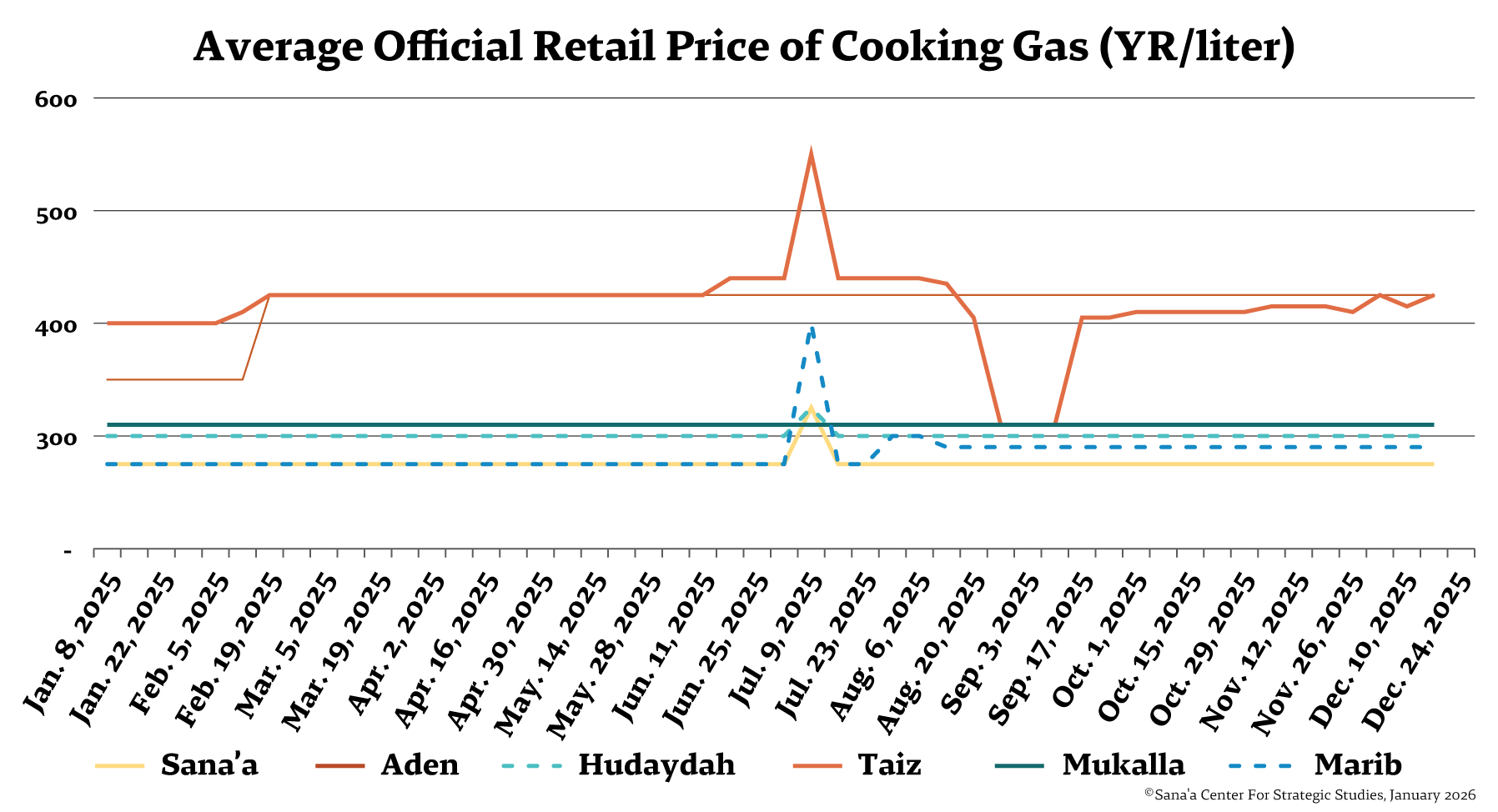
A widespread and severe gas shortage impacted Aden and other cities under government control from late November through December, and political instability and infighting prevented progress on a solution. The disruption resulted in long queues of cars and buses at the few stations that remained open. Citing depleted supplies, dozens of government-run filling stations across Aden suddenly closed, triggering a rise in black-market activity. The price of a 20-liter gas cylinder ranged between YR13,000 and YR15,000 in the second half of December, an increase of more than 52 percent above the official price of YR8,500.
The shortages are caused by a combination of interlinked factors: recurring tribal clashes and blockades disrupting supply routes, poor distribution arrangements, and the deliberate creation of artificial scarcity to maximize black market profits. Initially, media outlets attributed the disruption to recurring tribal clashes in Marib and roadblocks in Abyan. A tribal blockade launched on November 29 prevented shipments from leaving Block 18 in Marib, operated by the Safer Company. Abyan security forces later removed the blockade and reopened the international road, allowing tankers to proceed to Aden. But the shortages persisted. There have been widespread accusations of extortion and monopolistic practices. Dozens of gas tankers were seen waiting for hours at the Al-Alam checkpoint at the entrance of Aden, where illegal tolls were collected. Some of the trucks were reportedly then directed away from distribution stations and toward private traders’ yards to create scarcity, inflate prices, and generate illicit profits. The regular operation and lack of congestion at fuel stations in neighboring Abyan would appear to be further evidence of local market manipulation.
The government’s response to the crisis was slow and limited. On December 8, then-Aden Governor Ahmed Bin Lamlas held a meeting with representatives from the Aden Refinery and Gas Company, at which they agreed to release gas stored at the refinery to provide relief. Lamlas also ordered a ban on any gas leaving Aden for other cities, and media outlets reported that Aden would soon receive six tankers. In mid-December, the Yemeni Gas Company stated that it had pumped sufficient gas to address the shortage and restore market stability. This included dispatching a fleet of 461 gas tankers, the equivalent of approximately 1,852,000 gas cylinders, to meet demand in Aden and other governorates. The persistence of the crisis suggests that it was not caused solely by a delay in supplies, but rather by deficiencies in supply management and distribution regulation.
The crisis has forced the adoption of costly coping strategies, including paying extra to transport gas from distant areas or purchasing overpriced restaurant meals because cooking gas is unavailable at home. The institutional fragmentation triggered by the STC’s military escalation also hindered efforts to resolve the crisis.
Gov’t Signs Deal to Revitalize Al-Makha Port
The internationally recognized government announced a major infrastructure project for the port of Al-Makha in western Taiz. The Ministry of Transport, represented by the Red Sea Ports Corporation, signed a memorandum of understanding with Prima Investment Company Limited to rehabilitate, develop, and operate the port. At a cost of US$138.9 million, the project was said to include the construction of a new 280-meter-long marine berth with a draft of up to 12 meters, an additional 50-meter-long berth for mooring tugboats and small vessels, and container yards, warehouses, silos, and service and administrative buildings.
Transport Minister Abdelsalam Humaid said that “developing the port is a crucial step to improve its operational efficiency and restore its commercial role after many years of inactivity.” Located on the Red Sea Coast, the port has the potential to play a greater role in regional trade. The port’s director general, Abdelmalik al-Sharabi, said that the project would increase capacity, allowing the port to receive 195 ships and handle up to 2.27 million tons of cargo per year, with the potential for future expansion. Humaid said the agreement is based on legislation governing public-private partnerships, but it is unclear whether the government followed the legal procedures to select Prima Investment Company Limited. Yemen’s Tenders and Auctions Law requires that public tenders adhere to certain transparency standards, with a view to opening the door to competition. The government has not clarified the nature of the deal or its legal and financial terms, prompting criticism and speculation about who might benefit.
Media outlets have reported that Prima is affiliated with AD Ports Group, an Emirati company specializing in port development and management and logistics services, and a subsidiary of Abu Dhabi Holding Company, which is owned by the government of Abu Dhabi. However, the future status of the project is unclear following the Emiratis’ recent withdrawal from Yemen.
Iraq’s Rafidain Bank Closes Sana’a Branch
Iraq’s state-owned Rafidain Bank, one of the oldest Arab banks operating in Yemen since 1982, shut down its operations in Sana’a following international pressure to sever funding sources for the Houthis after their FTO designation by the US Treasury Department and the imposition of associated sanctions.
Rafidain reportedly came under immense pressure from the Treasury Department following the designation and was accused of processing financial payments for the group. The allegations surfaced following a high-level meeting in Washington in late April between then-US Deputy Treasury Secretary Michael Faulkender and Iraqi Foreign Minister Fuad Hussein. Faulkender reportedly warned Hussein that the bank needed to stop doing business with the Houthis and relocate to territory under the internationally recognized government.
Hussein responded that Iraq only recognizes and “deals with the internationally recognized Yemeni government,” which maintains an embassy in Baghdad. He denied the existence of transactions with the Houthis in Sana’a, and pledged to “personally verify this.” The Iraqi embassy in Washington also denied the allegations and stated that Rafidain’s Sana’a branch had been “non-operational since 2017.” In August, Rafidain signed a “professional partnership agreement” with US-based financial consulting firm K2 Integrity as part of its anti-money laundering and combating the financing of terrorism (AML/CFT) compliance efforts. However, the allegations resurfaced in August, when US Congressman Joe Wilson urged the Treasury to sanction Rafidain for processing payments for the Houthis. Wilson has previously called for sanctions against the bank, citing claims that Rafidain is facilitating large-scale transfers to Iran.
As of August 2025, the US had sanctioned more than 35 of Iraq’s 72 banks or imposed restrictions on their dollar transactions. Rafidain had been under scrutiny due to its perceived opacity, and media outlets have reported that the Iraqi federal government has utilized the bank to process and distribute salaries to members of the Iranian-backed Popular Mobilization Forces (PMF). This raised questions over whether the PMF was able to exploit loopholes in the Iraqi financial system to channel funds to other Iranian-backed forces, including the Houthis.
The Qatar National Bank Yemen has also begun the final liquidation procedures for its Sana’a branch. During a webinar organized by the Sana’a Center in mid-June, the governor of the Central Bank of Yemen in Aden (CBY-Aden) said that the two institutions had decided to liquidate after a near-total halt in their operations. Arab Bank, headquartered in Jordan, made a similar decision and began closing its branches in Sana’a, Taiz, and Ibb last year.
The collective closure of foreign banks’ operations in Yemen could trigger an exodus of foreign capital, deepening existing economic and financial challenges. The stifling financial environment imposed by Houthi authorities through the freezing of public debt assets, the imposition of illegal taxes, and direct interference in banking activities, combined with the fragmentation of the central bank, has created a complex financial and regulatory landscape. The designation of the Houthis as a terrorist organization has compounded existing challenges and elevated the risks associated with investing in Yemen.
Houthis Initiate Public Auction For Seized Al-Tadhamon Bank Land
On October 28, the Houthi-aligned Specialized Criminal Court in Sana’a announced an auction for the sale of a 123,978-square-meter plot of land owned by Al-Tadhamon Bank, one of the largest private Yemeni banks in terms of deposits and asset size, in the Al-Sitteen neighborhood of Sana’a city. The Houthi announcement listed an exorbitant price of YR3.099 billion (approximately US$5.8 million) for the auction, scheduled for November 16.
This auction, the second of its kind, is part of the Houthis’ broader strategy to seize and confiscate the properties of opponents who challenge their authority, often under various pretexts, including alleged treason. Since 2017, the group has implemented sweeping campaigns to loot the homes and real estate properties of hundreds of individuals opposed to them. The Houthis have instrumentalized state institutions such as the judiciary and the Central Bank of Yemen in Sana’a (CBY-Sana’a) to provide legal cover for their asset seizures. To justify the confiscation of Al-Tadhamon’s assets, the Houthis claimed the land was linked to former President Abdo Rabbo Mansour Hadi. In response, the government-run CBY-Aden issued a statement warning of imminent local and international sanctions against any individuals or entities involved in the Houthis’ illegal actions targeting the real estate and assets of banks and financial institutions. The CBY-Aden emphasized that “any agreements, sales contracts, transfers of ownership, mortgages, or other transactions resulting from such actions are invalid and illegal, issued by entities designated as terrorist organizations, and expose their owners to the loss of their financial rights and full legal accountability.”
Houthi Smuggling of Currency Printers Thwarted
On October 2, the Counter-Terrorism Service in Aden announced it had thwarted a Houthi attempt to smuggle a shipment of modern currency printers. The operation, carried out in coordination with the Customs Authority, arrived from Germany via the container port in Aden. The Counter-Terrorism Service referred the incident to the CBY-Aden, which issued an official request to the Public Prosecutor to hold the printers for expert examination.
An investigation conducted by the Sana’a Center’s Economic Unit found that the printers were imported by a company known as Printers Aid Company Ltd., an authorized dealer and contract partner of Germany’s Heidelberger Druckmaschinen AG. Printers Aid, based in Sana’a and owned by the Al-Mahdi Company, which is part of a wider business network aligned with the Houthis. The confiscated printers are Heidelberg SM 74-10P series models and are equipped for commercial printing of packaging, labels, and high-volume publishing materials. They can print paper banknotes, but lack the security markings that authenticate legitimate currency. It remains unclear whether they are capable of printing Yemeni rial banknotes.
Imported Cement Hits the Market
The Israeli bombing of cement factories in Houthi-controlled Hudaydah and Amran in May compelled a rapid shift to using external suppliers to meet domestic demand. Media outlets reported that markets in Houthi-controlled Sana’a have suddenly begun selling bags of cement deceptively branded as being locally manufactured by the Amran National Cement Factory. The General Cement Corporation later admitted that the cement had been imported before relabeling, as this was necessary to bridge the supply gap following the shutdown of its factories due to Israeli airstrikes.
However, the Yemeni Consumer Protection Association in Sana’a announced its intent to file a complaint with the Attorney General. The association said the relabeling was a serious violation of several laws, including Consumer Protection Law No. 46 of 2008, and called on the relevant authorities to take action.
UN Panel of Experts Documents Houthi Revenue Extraction
The latest UN Panel of Experts (PoE) on Yemen report documented how the Houthis have continued to generate revenue through extractive taxes, illegal seizures and levies, extortion, and smuggling, despite financial sanctions targeting the group.
The Houthis have adopted an aggressive system of taxation and asset seizure to sustain and finance their operations. Main sources of revenue include levies imposed on individuals and companies, a sales tax on goods such as fuel and cigarettes, and a general tax on all imports. The Houthis have also collected a significant share of surplus profits from all sectors, with a particular focus on the financial and banking sectors.
Another lucrative sector is telecommunications, which provides the group access to sizeable revenues. Although several telecommunications companies have relocated to Aden, much of their infrastructure remains in Houthi-controlled Sana’a. The Ministry of Communications and the Public Telecommunications Corporation are led by Houthi loyalists, ensuring the group’s operational and financial control. These state bodies, in turn, control private operators. The Houthis collect an estimated US$20 million in monthly revenue from roaming and international calls, including from usage by subscribers in government-controlled areas. The Yemen Mobile company indicated in its 2024 annual report that it paid YR26 billion (approximately US$16 million) in zakat and income taxes to the group. Overall, it is estimated that the Houthis collect approximately YR150 billion rials annually (equivalent to US$92 million) from the telecom sector (public and private).
The Houthis also collected revenues from the civil aviation sector, but these revenue streams have been suspended since April 2025 following the US redesignation of the group as a Foreign Terrorist Organization (FTO). Other revenue streams had included landing and take-off fees at Sana’a International Airport, passenger excess baggage fees, and freight charges before the airport was rendered inoperable following Israeli airstrikes. In August 2024, the group froze US$120 million belonging to Yemenia Airways.
The group has also continued seizures of commercial enterprises and financial institutions. In July, the Houthis seized the Yemen Gulf Bank and appointed senior official Raed al-Shaer as the bank’s judicial custodian. A Houthi loyalist was also recently appointed to the Board of Directors of Kamaran Company for Industry and Investment.
The report also detailed how the Houthis have placed restrictions on humanitarian access and delivery in areas under their control and have diverted aid, including medical supplies, for economic benefit. According to the report, “many workers have fled, and businesses have relocated to the Yemeni government-controlled areas to avoid threats, arbitrary detention, enforced disappearance, or property confiscation.” Humanitarian entities have been pressured to hire individuals selected by the Houthis, who ensure that beneficiary lists and aid disbursements align with the group’s interests. The group often demands a share of project funds, exploiting humanitarian aid to mobilize further income and fund their war efforts. Aid is stolen and sold, food baskets have been diverted to Houthi combatants, and tribal leaders have been pressured to provide new military recruits, including children, in exchange for aid. Over 70 UN staff also remain in Houthi detention, along with many more employees from international organizations and members of civil society.



- The case of Ras al-Arah, located in the southwest of Lahj governorate along the Arabian Sea, highlights the degree to which funds are being diverted from the public treasury. This port, was controlled by the Lahj local authority and UAE-backed STC forces, saw hundreds of millions of Yemeni rials siphoned off by various officials. It is also a major site for the large-scale smuggling of contraband (including toxic pesticides, cigarettes, and medicines) and an entry point for African migrants.
- The statement called on the Taiz Military Axis to cease interfering with state resources and collecting illegal tolls on roads under its control, and for the formation of an investigative committee that would refer units found to be involved in embezzlement to the relevant legal authorities. A July memorandum from the Ministry of Local Administration estimated that forces affiliated with the Taiz Military Axis had seized YR2.23 billion in qat taxes over a one-year period from May 2024 to May 2025. The diversion of public revenues by military units in Taiz and their refusal to deposit them into the state treasury have been longstanding issues. Former Defense Minister Mohsen al-Daeri explicitly called on the Taiz Military Axis to cease all violations in September 2024 and again at the end of June 2025. The Taiz Military Axis has justified its revenue extraction by noting that it receives no support from the central government except for intermittent food supplies and irregular fuel deliveries. The Axis has also claimed that its soldiers are paid less than units based in other governorates. The statement called on the Taiz Military Axis to cease interfering with state resources and collecting illegal tolls on roads under its control, and for the formation of an investigative committee that would refer units found to be involved in embezzlement to the relevant legal authorities. A July memorandum from the Ministry of Local Administration estimated that forces affiliated with the Taiz Military Axis had seized YR2.23 billion in qat taxes over a one-year period from May 2024 to May 2025. The diversion of public revenues by military units in Taiz and their refusal to deposit them into the state treasury have been longstanding issues. Former Defense Minister Mohsen al-Daeri explicitly called on the Taiz Military Axis to cease all violations in September 2024 and again at the end of June 2025. The Taiz Military Axis has justified its revenue extraction by noting that it receives no support from the central government except for intermittent food supplies and irregular fuel deliveries. The Axis has also claimed that its soldiers are paid less than units based in other governorates.
Chief Economist