

From Stagnation to Destabilization: How Yemen is Becoming the Region’s Ticking Time Bomb
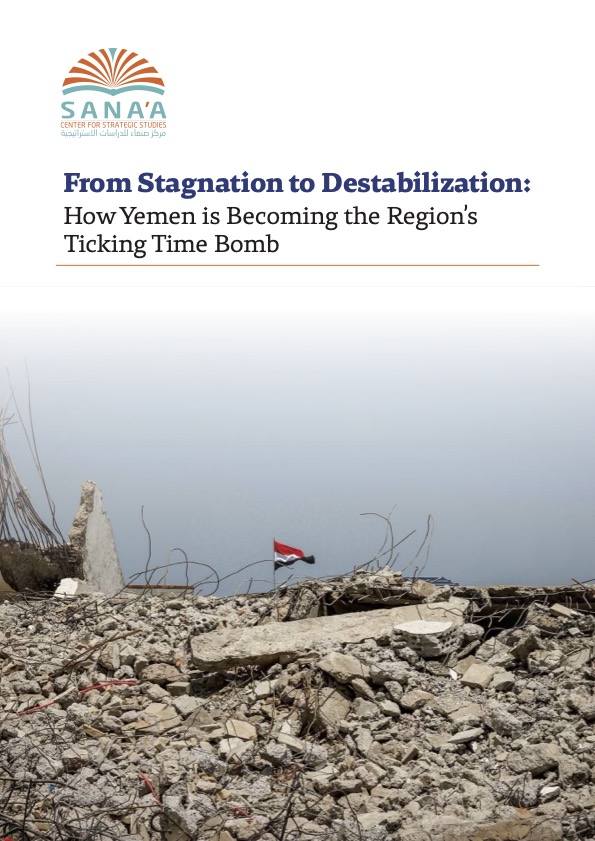
Recent developments in Yemen have broken years of stagnation, bringing the country into an explosive new era. The Southern Transitional Council’s (STC) initial expansion into the eastern governorates, and its subsequent loss of territory and dissolution under Saudi pressure, have revealed the fragility of the Gulf powers’ “containment” approach to Yemen. This strategy, which has traditionally relied on sharing influence by backing local politicians and armed factions, had managed to keep Yemen’s fragile anti-Houthi coalition together for nearly a decade. Now, as regional priorities shift and the local landscape changes, that time is over.
The priorities of Riyadh and Abu Dhabi in Yemen have long been diverging. In recent years, Saudi Arabia moved toward a political solution with the Houthi group (Ansar Allah) in Sana’a, while the UAE focused on consolidating influence along the country’s southern coastlines and maritime corridors. This planted the seeds for competition between the two powers, which publicly erupted with the STC’s surprise advance on Yemen’s eastern governorates in December 2025. The move crossed Saudi red lines, bringing UAE-backed forces near the Saudi border and raising Saudi fears of a complete loss of influence in the country.
The drastic whiplash in political control between Saudi Arabia and the UAE has unfolded against the background of the ongoing conflict against the Houthis. Although both countries entered the war in 2015 to fight the group, that mission has been forced to share the table with other mounting priorities, which increasingly center on competition between the two powers. Simply put, neither state now appears to make combating the Houthis a central part of its political calculations.
On the other hand, the Houthis’ silence during the southern escalation may indicate that they were pleased with the discord and fragmentation among their allied adversaries. Most public comments from Houthi leaders in December and early January focused on external events – an insult against the Quran in the United States, the Israeli recognition of Somaliland, the US military’s capture of Venezuelan President Nicholas Maduro, US President Donald Trump’s demand to control Greenland, and protests in Iran. Their focus on broader international issues enabled them to present themselves to their supporters as a legitimate regional power, while their rivals remained preoccupied with settling local scores and squabbling among themselves.
On the ground, the Houthis have continued to mobilize large swaths of their population and launch new recruitment campaigns in their areas, while keeping a close eye on weapons and armored vehicles recently transferred to the frontlines, which could represent a direct threat. The STC removed weapons and equipment from Hadramawt to Al-Dhalea, Aden, and other areas after seizing control of the governorate. During the recent operation to expel the STC, other forces within the anti-Houthi coalition sent additional weapons and ammunition to Marib and other areas. The Houthis could respond by moving to neutralize these assets.
Across the Gulf of Aden, Israel’s recognition of the autonomous region of Somaliland has added another layer to the Yemeni equation. Israel remains firmly committed to its hostile stance toward the Houthis, believing they have not yet been sufficiently “disciplined,” like other Iranian proxies, who suffered heavy blows in Syria and Lebanon. In recent years, Israel has adopted a strategy of fueling local rivalries and destabilizing governments. To this end, Israel appears to be strengthening security coordination with Somaliland, which could soon yield a Red Sea airbase. This would expand its regional influence and capabilities in the southern Red Sea, which would be helpful should Israel’s military confrontation with the Houthis resume.
The Houthis have cultivated their own footprint in the Horn of Africa through recruitment networks, enabling them to build ties across the Red Sea and extend weapons-smuggling networks. After a period of relative silence, the Houthis have again raised the possibility of renewed Red Sea conflict, and appear to possess the tools and contacts to do so via their own long-range arsenal and links to Al Shabaab, the Somali Al-Qaeda affiliate. The Houthis have long sought to play a role on the opposite shore of the Red Sea, much as Hezbollah had in Yemen and Syria. According to a security source, Houthi intelligence agents are actively working with military units in Sana’a to prepare teams and military experts for special operations missions in Africa.
In effect, all worst-case scenarios remain open. Political—and potentially military—confrontations in southern Yemen are possible, fueled by ongoing mobilization around demands for the restoration of the southern state in Aden and continued Saudi-Emirati competition. Meanwhile, the Houthis retain multiple options for escalation, including attacks on frontlines and beyond. The group could exert pressure along the Saudi border, in the Horn of Africa, or against maritime traffic and Israel – especially if Iran is directly targeted in another round of military conflict.
The convergence of multiple trajectories in Yemen: prolonged political stagnation, competition among regional allies, and the rise of armed actors, risk creating a regional catastrophe. The danger of the current moment lies in the continued erosion of constraints that have so far prevented such an explosion. Containment strategies may keep the situation at bay for now, but they deepen the roots of underlying grievances and widen their repercussions. As the conflicts in Yemen, the Red Sea, the Horn of Africa, and Israel become increasingly interconnected, it will no longer be viable to treat Yemen as a singular file. As it has in the past, the cost of failure in Yemen will extend beyond its borders, to a region already in turmoil.
This analysis is part of a series of publications produced by the Sana’a Center and funded by the government of the Kingdom of the Netherlands. The series explores issues within economic, political, and environmental themes, aiming to inform discussion and policymaking related to Yemen that foster sustainable peace. Any views expressed within should not be construed as representing the Sana’a Center or the Dutch government.
Researcher