

Back to War
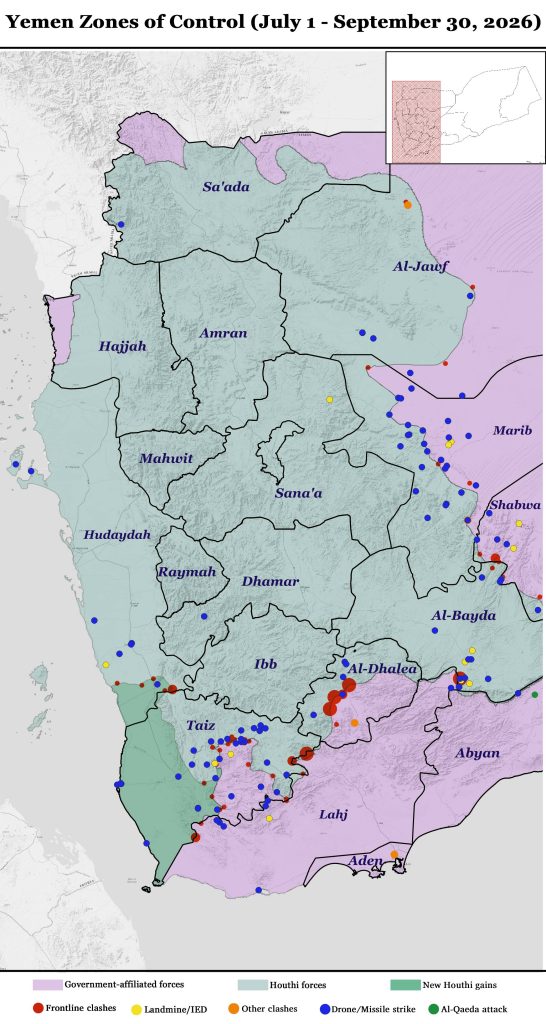
Yemen’s civil war has reignited in dramatic fashion. Since September, the conflict has experienced the largest shifts in territorial control and the highest casualties in nearly five years. There is fighting on frontlines across the country, Saudi airstrikes have resumed, and the stage is set for decisive, perhaps final campaigns by both the Houthi group (Ansar Allah) and pro-government forces and their backers in Riyadh. It is a critical moment for Yemen and the region. The future of the Yemeni republic, the Houthi political project, and the balance of power across the Gulf and the southern Red Sea all hang in the balance, as both sides seek to establish military supremacy and credible deterrence.
Renewed escalation began in July, when Saudi Arabia and the internationally recognized government enforced restrictions on the airspace over northern Yemen by bombing Houthi-held Sana’a Airport. The group quickly responded by targeting Saudi airports. As the situation deteriorated, frontline clashes between Houthi and pro-government forces intensified along the Red Sea coast in Hudaydah, and on front lines in Taiz, Lahj, and Marib. The Houthis announced a new policy of a “blockade for a blockade,” demanding an end to restrictions on trade and movement from the territory under their control, and targeting Saudi energy infrastructure and shipping. Saudi airstrikes resumed in turn, hitting Houthi positions for the first time since early 2022.
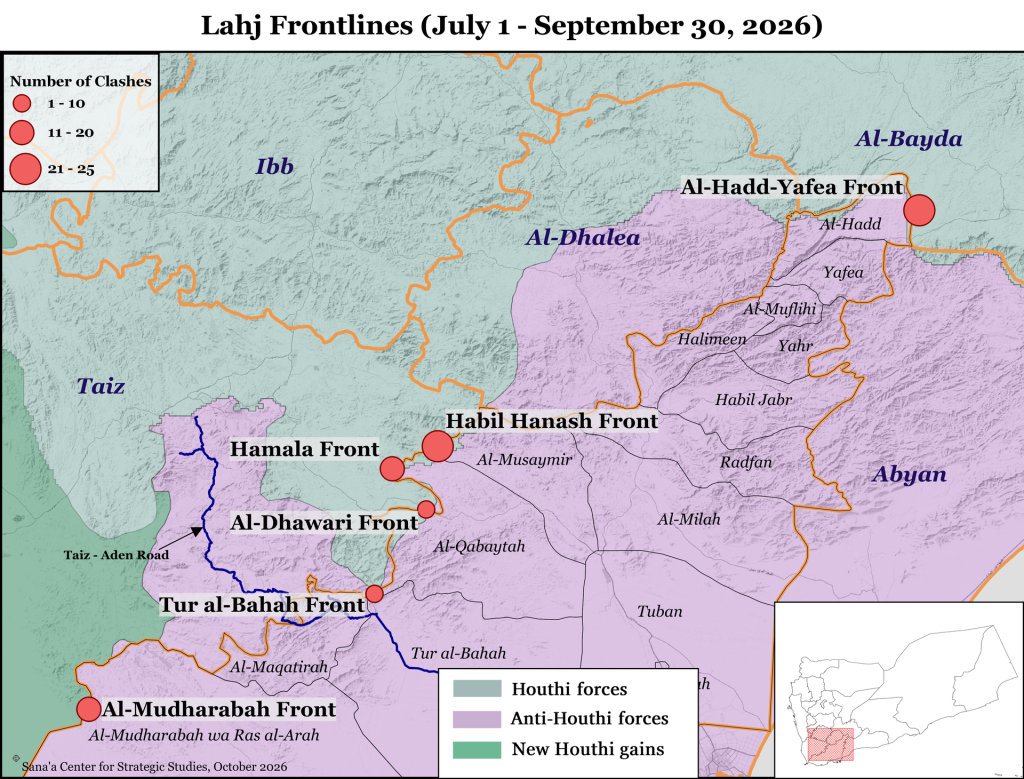
After weeks of creeping escalation over the summer, the Houthis broke through in the first week of September, first in the mountains in Al-Kadhah in Taiz, before sweeping through the Tihama coastal plain and seizing the historic port city of Al-Makha. Pro-government forces conducted a disorderly retreat toward Aden, and fell back in the mountains around the besieged commercial hub of Taiz city, one of the last urban centers in northern Yemen still held by pro-government forces. Houthi forces continued their advance south, seizing what was left of Yemen’s Red Sea coast and capturing Mayyun (Perim) Island, which sits on the Bab al-Mandab, the narrow strait between Arabia and the Horn of Africa. The group also pressed into the mountains in Taiz and Lahj, seeking to control the high ground overlooking its newly captured territory and to cut roads and lines of communication and supply from Taiz city to Aden and the coast. The Houthis also escalated their attacks against Saudi Arabia, targeting Aramco facilities at the key oil terminal in Yanbu, and conducting unprecedented drone and missile attacks on the Saudi capital Riyadh.
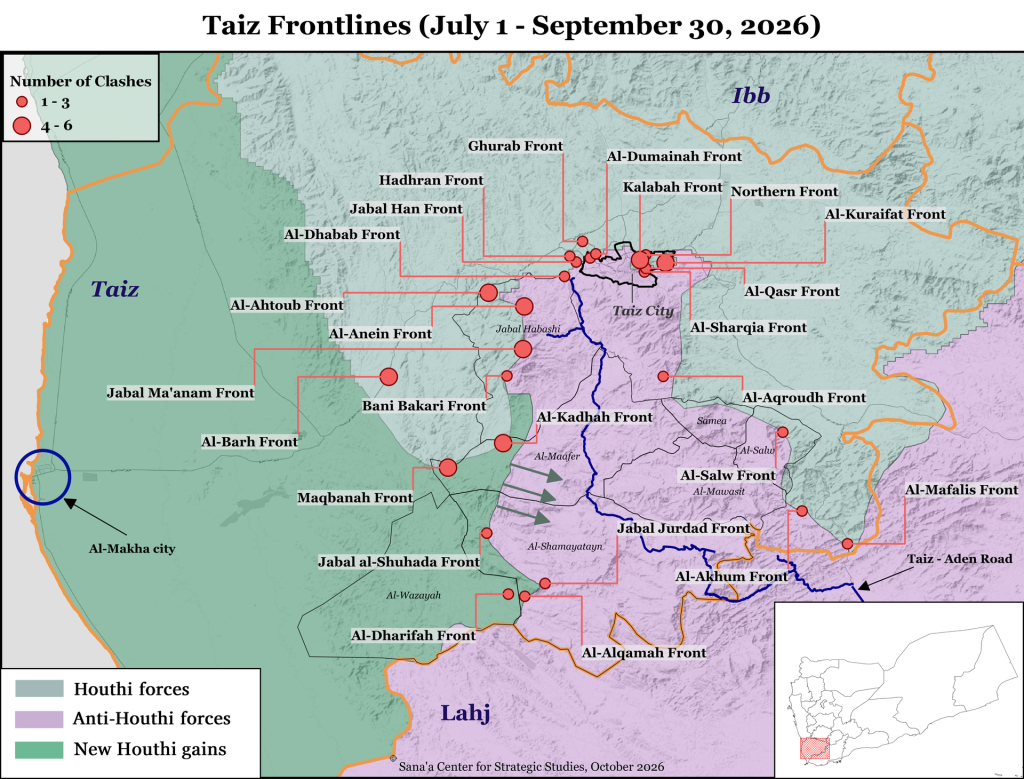
Intense fighting ensued in the mountains to the east, southeast and southwest of Taiz city, which now sat at the head of a vulnerable salient. Yemen’s third-largest city, Taiz has been repeatedly besieged during the war. The road through Al-Turbah to the government’s interim capital in Aden was soon threatened from both sides.
The government’s October 4 announcement of a general mobilization and a counteroffensive to restore its authority over the entire country was welcomed in some corners as a belated admission of its desperate situation. The Houthis have a significant advantage in manpower and materiel, and the government had not undertaken such an operation in years, and never without support from the UAE. A subsequent counterattack by pro-government forces on the West Coast saw them retake the shores of the Bab al-Mandab and Mayyun Island and reach as far north as the coastal town of Dhubab, though they have been unable to retake Al-Makha. Saudi airstrikes have likely been more effective on the open ground along the coast than in the mountains, where Houthi forces are reportedly digging into defensive positions and tightening the noose around Taiz city.
Taiz is now reportedly completely cut off, with intense fighting targeting roads and checkpoints into the city. Recent Houthi strikes have penetrated the defenses of Riyadh Airport, causing casualties. Both sides have offered amnesty for opposing fighters willing to lay down their arms, but there have already been reports of atrocities. The trajectory at present is for further escalation, with all sides pursuing a definitive change in the current status quo, with avenues for de-escalation and mediation seemingly behind them.
The Flight
The catalyst for escalation was a flight from Tehran. A civilian aircraft operated by US-sanctioned operator Mahan Airlines landed at Sana’a airport at dawn on July 3, the first Iranian flight in a decade. The Houthis said they had confronted Saudi warplanes that attempted to intercept the plane, and threatened attacks on Saudi airports if there was further interference. The plane subsequently ferried Houthi officials to the funeral of late Iranian Supreme Leader Ayatollah Ali Khamenei in Tehran. Saudi Arabia and the internationally recognized government then offered to facilitate the return of the delegation, but the offer was rejected by the Houthis. As the plane returned, the runway at Sana’a Airport was bombed to prevent it from landing, forcing it to divert to an airstrip in Houthi-held Hudaydah. The Houthis in turn made good on their threat, firing missiles at Al-Abha Airport in Saudi Arabia.
Both the Houthi provocation and the rapid, militarized response were strategic choices to recast the parameters of Yemen’s frozen civil war, which has been characterized by low-intensity clashes and a stagnant peace process since 2022. Even as the entire region became gripped by the war between the US, Israel, and Iran, the Houthis had largely stayed out of it. The group conducted a few missile and drone attacks on Israel in early April and another in early June, and parroted Iranian rhetoric about a “unity of fronts” across the region and threats to close the Bab al-Mandab in concert with the Strait of Hormuz. But Houthi negotiations with Saudi Arabia continued through the spring, including direct talks in April and the announcement of a forthcoming historic prisoner swap in mid-May. Still, there was little headway on the stalled “roadmap” for negotiations that the sides had pursued beginning in 2022, which would provide the group with substantial economic relief and remove restrictions on its ports and airports.
By June, the Houthis appeared to have run out of patience, particularly as the economic situation in northern Yemen deteriorated, and began threatening to target Saudi interests if progress was not made. When a memorandum of understanding between Iran and the US was signed, but no commensurate progress was made in their own negotiations with Riyadh, the Houthis likely believed that the Saudis were actively stalling. The group began escalating its public rhetoric against the Kingdom and blaming it for the deteriorating economic conditions, and began a new campaign of general mobilization.
The Houthis may have feared being sold out or abandoned in further talks between Iran and the US, or as Iran de-escalated with its Gulf neighbors. But as US-Iran talks stumbled and the Strait of Hormuz remained contested, the Houthis were provided a unique opportunity to exert leverage against Riyadh. Some 12 percent of global trade passes through the Bab al-Mandab, including nearly a quarter of global container traffic, and Saudi Arabia had diverted oil exports to the Red Sea to bypass the trouble in Hormuz.
There was growing concern that the Houthis would join the regional war if strikes against Iran resumed, increasing costs on the US and its Gulf allies. This served as a useful strategic lever and means of escalation for Tehran, but in the end, it was the other way round. The Houthis have been shrewd in using regional events to their advantage, as they did after October 7. The group had little interest in re-escalating against the US, with whom it had agreed a ceasefire in 2025 after a painful bombing campaign. But Riyadh was vulnerable. The Houthis had been building up their military capabilities for years, particularly in the Red Sea, and were well placed to act. If Hormuz reopened, the opportunity to press Riyadh for concessions, including the removal of restrictions on its ports and airports, might be gone.
For their part, both Riyadh and the internationally recognized government appeared primed to respond to the Houthis’ assertion of sovereign airspace. Saudi Arabia may have already resolved to escalate at some point in the future, with the Houthis simply forcing their hand. The government claimed the strikes on the runway at Sana’a Airport, and has insisted on this framing, though the Yemeni air force had been destroyed by 2015. The rapid reaction reflected a military assertiveness by the coalition that has long been absent in their confrontations with the Houthis. After the UAE’s departure from Yemen in January, Riyadh spent the first half of 2026 reorganizing formerly Emirati-backed forces, including the Giants Brigades, National Resistance forces, and units affiliated with the Southern Transitional Council. These were among the better-organized and more effective units under the aegis of the government, though the fractious relationship between Riyadh and Abu Dhabi fueled internal competition and hampered coordination in the anti-Houthi alliance. Now the sole sponsor of pro-government forces, Riyadh must have been sufficiently confident in the reorganization and rearming to assert itself against the Houthis, a confidence apparently shared by many in the pro-government camp.
Blockade for Blockade
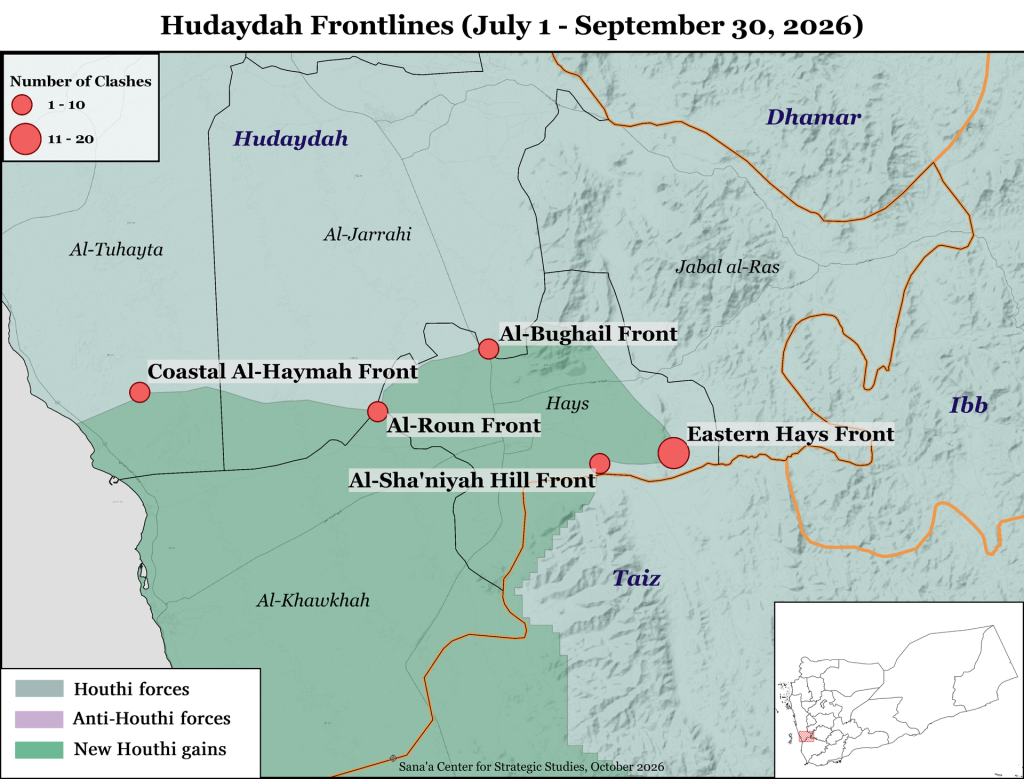
The tit-for-tat strikes soon devolved into a widening gyre of violence, marked by Houthi attacks on Saudi energy infrastructure and military assets, Saudi strikes on Houthi targets, and a massive uptick in fighting across numerous frontlines in Yemen. Heavy fighting began within days on fronts in Taiz and southern Hudaydah, where the most significant fighting in a year caused nearly 200 casualties. Both sides reinforced frontlines across the lines of contact, and Riyadh reportedly sent arms shipments to pro-government forces along the West Coast. On July 20, the Houthis announced they would pursue a policy of a “blockade for a blockade,” and prevent Saudi shipping from transiting the Bab al-Mandab. Four days later, they attacked two Saudi tankers. Riyadh responded with airstrikes in Hudaydah and on Kamaran Island in the Red Sea, and the Houthis in turn targeted Saudi Aramco facilities in Jizan and Yanbu.
By the end of July, the escalation still appeared as if it might be contained. Riyadh signaled that it was preparing for a return to war, should this become necessary, but its strikes on Houthi targets remained limited, and the vulnerability of its energy infrastructure made the cost of broader conflict immediately apparent.
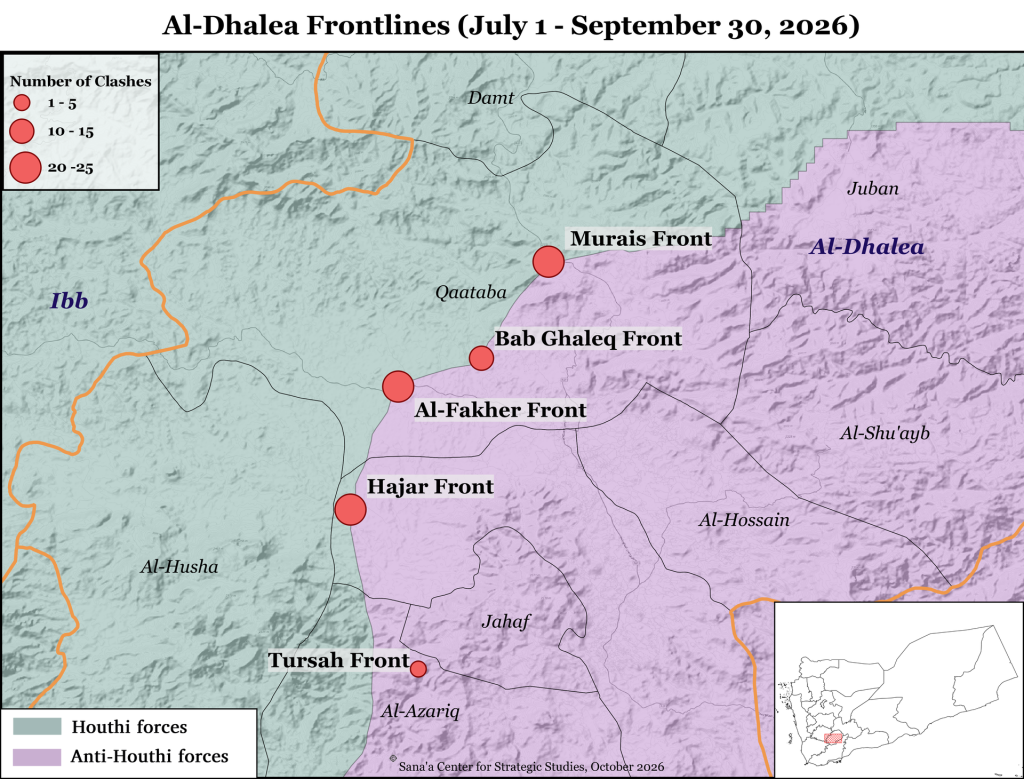
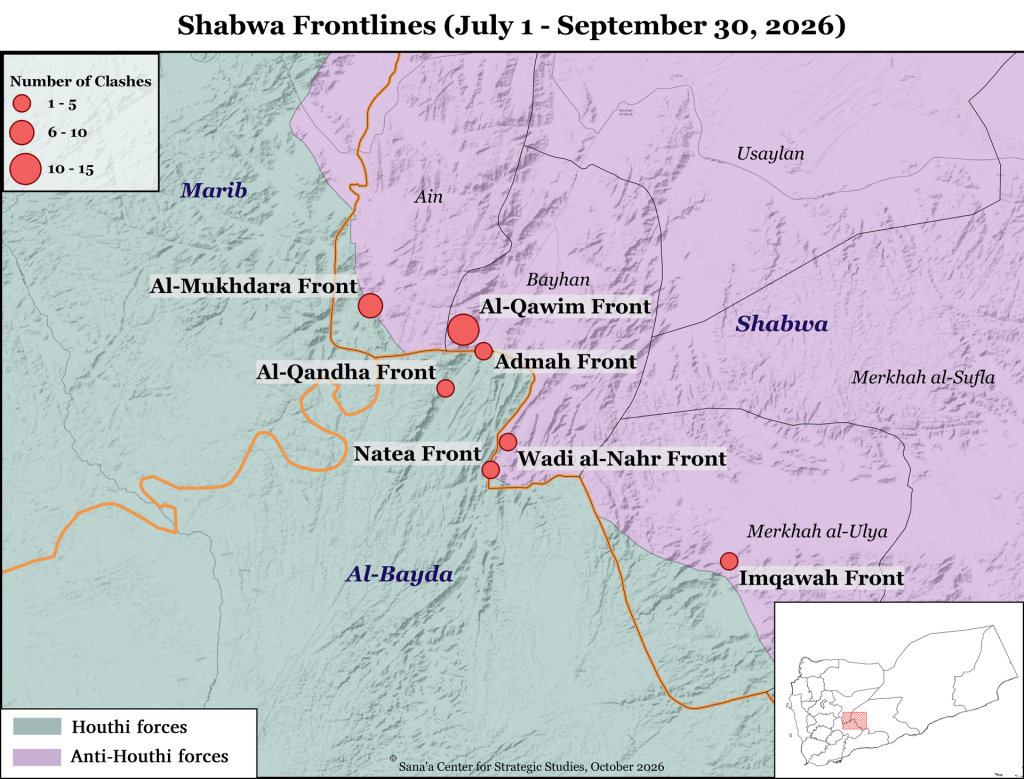
But the situation on the frontlines in Yemen soon began to deteriorate dramatically. On August 6, the Houthis targeted army camps in Hadramawt and Marib with ballistic missiles, killing 45 people and wounding 400. On August 8, intense fighting took place in the far southwest of Hudaydah’s Al-Tuhayta district, with nearly one hundred people killed and more than 300 wounded in the deadliest fighting in the area since 2018. The next day, a Houthi missile and drone attack on the port city of Al-Makha struck civilian and military sites, killing seven people and wounding 30 more. Fighting continued to escalate throughout August, with frontline clashes in Marib, Lahj, Shabwa, Hudaydah, and Taiz. Though the scale and intensity of the fighting increased, neither side made any significant territorial gains, and the frontlines largely held.
As the Houthis stepped up their attacks on Saudi shipping and oil terminals, Riyadh signed a mutual defensive alliance with Turkey and Pakistan on August 7. Though the timing was conspicuous, the Mecca Agreement had been in the works for some time and was intended as a first step toward a regional security order following the Kingdom’s fallout with the UAE and the US’s diminishing engagement. Nevertheless, it signaled that Riyadh would not entertain the Houthis’ maximalist demands indefinitely. Iran sent military advisors to support Houthi forces and help them with targeting along the Red Sea coast. Houthi intelligence penetration, likely facilitated by Iranian support, Russian satellites, and the group’s control over domestic cellular networks, was apparent as the group targeted Tareq Saleh’s National Resistance forces in Al-Makha. Saleh himself reportedly avoided a strike on his location by a mere ten minutes.
The Fall of Al-Makha
By the end of August, the frontlines still held, with pro-government forces demonstrating a newfound capacity for drone warfare, a domain hitherto dominated by the Houthis. The Houthis were reportedly having trouble mobilizing new troops, with tribes no longer so eager to cooperate with enlistment, and were reportedly making up the numbers in part through the organized recruitment of child soldiers. Even elements of a large tribal gathering in Al-Rayyan agreed to join government forces on the frontlines.
But the illusion of military parity was shattered in the first week of September. After heavy fighting in southern Hudaydah and western Taiz, the government’s line collapsed on the West Coast, and Houthi forces swept south, taking the key port of Al-Makha, the coastal town of Dhuhab, and Mayyun Island in the Bab al-Mandab. National Resistance forces reported they had suffered some 2,000 casualties in the fighting, and claimed to have inflicted thousands more on the advancing Houthis. The lightning advance was precipitated by a failure of coordination between National Resistance forces and the Taiz Military Axis, leading to a breakthrough in Al-Kadhah. Pro-government forces were still operating under separate chains of command, leading to conflicting sets of orders. A joint command center, a proposal that had been mooted for years, was only set up midweek as the scale of the disaster became apparent, and the government still faced issues with its constituent forces refusing to fight outside their home governorates. Saudi air support was insufficient or insufficiently organized to provide effective cover for the forces on the ground, which were reportedly also outgunned by a Houthi advantage in heavy weaponry, particularly artillery. Routed, forces on the West Coast fell back toward Aden.
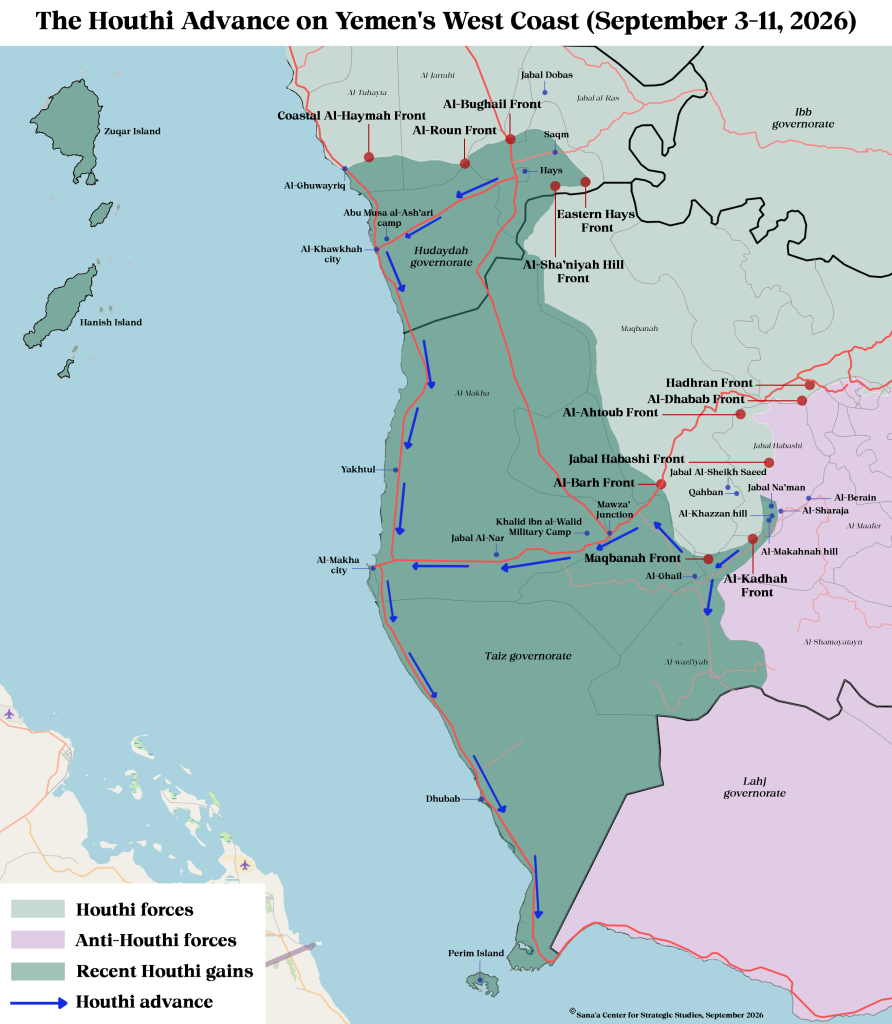
As of writing, the fighting continues. Government forces have advanced to Dhubab, but have been unable to press north toward Al-Makha. In the mountains of Taiz and Lahj, the Houthis are seeking to take and fortify the commanding heights over the coastal plain and have now completed the encirclement of Taiz city, cutting the government supply lines east to the coast and south to Aden. The clashes have been characterized by the taking and re-taking of mountain positions in back-and-forth fighting. Areas around Taiz city are heavily populated, and new front lines are driving waves of displacement. UNOCHA reported that at least 213,000 people have been displaced since the start of the September offensive.
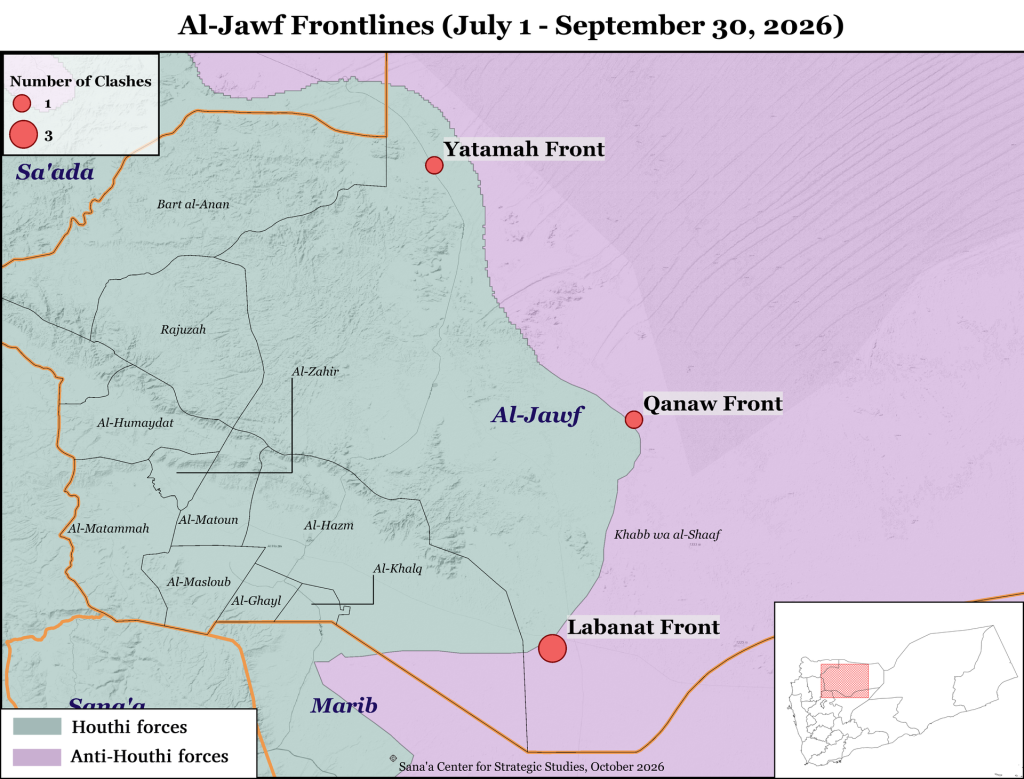
Houthi strikes on Saudi Arabia continue, including a series of high-profile attacks on Riyadh Airport, and there are reports of cross-border shelling in Sa’ada. Saudi airstrikes on Houthi targets have continued as well – according to Houthi military spokesperson Yahya Sarea, the Kingdom has carried out a total of 2,177 air and missile strikes since the beginning of the recent escalation. Strikes have targeted Houthi positions along the frontlines, but also Sana’a, reportedly targeting Houthi commanders and oil facilities. The Kingdom has sought international support as it vows to continue the fight. Crown Prince Mohammed bin Salman asked US President Donald Trump to restart military operations against the group. Trump reportedly asked the Pentagon to prepare for strikes, but subsequently demurred, canceling the operation as munitions were being loaded onto US bombers. Saudi Arabia has now activated its defensive alliance with Pakistan and Turkey, which have pledged their assistance. The Turkish parliament has yet to ratify the pact, and although Turkey has said it will provide defensive and technical support, it has so far ruled out troops for offensive operations. France has publicly committed to sending military assets to defend the oil terminal at Yanbu.
The steady march of escalation has brought the conflict to a critical juncture. If the Houthis can force the surrender of Taiz, press toward Aden, or seize the oilfields in Marib, they could effectively knock the government out of the war and force it to sue for a punitive peace. If the government, backed by Saudi air power, can reverse its recent fortunes and retake control of Al-Makha or relieve the siege of Taiz, it might force the Houthis back to the negotiating table. But much depends on Saudi Arabia and its willingness to stomach a rising onslaught of Houthi attacks and an entrenched threat of re-escalation. For now, the fighting continues.
Frontline Maps


Editor and Researcher